Monday, July 09, 2007

Stephen Camp

A Comparison of 9x18mm Makarov, .380 ACP, and .38 Special (2" barrel)

By Stephen Camp

A common topic centers on which is best: 9mm Mak, .380 ACP, or the .38 Snub. Though ballistically in the same general ballpark, each round brings with it certain advantages as well as negatives. Let's take a look at what we might expect from these or similar loads.

9x18mm: Rare in the US until the mass importation of the Makarov pistol, the round is now common among shooters. Its ballistic payload is similar to a top end, maximum effort .380 ACP. One load approaches that of the 9x19mm, but only when the latter is being fired from a short (3") barrel. LVE Brown Bear 115-gr. JHP usually hits between about 1020 ft/sec and 1050 ft/sec depending upon the particular Makarov it's being fired from. Federal 115-gr. JHP from a short 9mm is usually less than 100 ft/sec faster as that load is not optimized for shorter barrels. There are many other loads in which the 9mm uniformly walks away from the Mak's capabilities.

In normal trim, it's generally accepted that the 9x18mm throws a 95-gr. 0.363" diameter bullet about 1050 ft/sec.

Foreign-made 9x18mm ammunition is very inexpensive and allows for considerable shooting. It is much less costly than the ballistically similar .380 ACP and slightly more powerful.

.380 ACP: Dimensionally, this is a scaled down .45 ACP from those round's creator, John M. Browning. Like the Makarov, it is most often fired from blow back semiautomatics though a few pistols so chambered have used the locked breech common to higher-pressure rounds like the 9x19mm.

Typical performance from the "traditional size" .380 ACP like the Walther PPK is a 95-gr. bullet at 950 ft/sec. Add approximately 100 ft/sec for +P 90-gr. bullets from the same size pistols.

Note: The really compact .380's currently available were not used in this report. Velocities generally suffer significantly when fired from barrels less than about 3.25". If you use one of the small .380 ACP pistols, you may need to go to +P rounds to insure that the velocity is enough to actually obtain expansion. Having seen JHP ammo expand very nicely from the Makarov/Bersa/Walther sized .380's and act like ball when fired from some of the really compact .380 pistols, I personally prefer the standard size pistols in this caliber. Others may truly need to go with the smaller, but might want to be sure that their ammunition is capable of expansion. There's no guarantee of it with any of them, but I think we're right on the edge with some loads in the smaller pistols.

Some very nice pistols are offered today in .380 ACP (9x17mm, 9mm Corto, 9mm Kurz). Ammunition is more costly, but the selection of high performance JHP ammo is more readily available. Such can be had from American makers like Remington, Winchester, Federal, Corbon, and Hornady. Speer offers their excellent Gold Dot in this caliber as well.

All of this will be more expensive than the foreign JHP is available in 9x18mm Makarov. Like I said, there's "good" and "bad" with each of these calibers.

.38 Special (2" barrel): Still popular, the velocity for most bullets fired will be in the same range as either the Makarov round or the .380 ACP. The difference is that the .38 Special will toss slugs of slightly greater weight at these speeds. Expansion is similar to the other two, but penetration is almost always a bit deeper.

There are many JHP loads in various bullet weights readily available in this caliber. None are as inexpensive as the 9x18mm's. With its heavier bullet capability, the .38 snub's recoil goes up significantly for most folks when compared to the .380 or 9mm Makarov.

Actual Velocities: The velocity figures that follow are all based on 10-shot strings of fire. The listed handgun is what the ammo was fired from.

Both the .380 (left) and 9mm Makarov use 95-gr. FMJ in most FMJ loads. There are exceptions, but this seems to be normal for them in their traditional non-expanding loads.

The CZ83 and Makarov were used for velocity information as both have almost the same length barrels.

.380 ACP (CZ-83 w/3.8" bbl): Average Velocity (ft/sec)

Standard Deviation and

Extreme Spreads are listed in ft/sec.

Glaser 70-gr. Safety Slug(Silver) 1299 (ES: 116/SD: 44)

Magtech Guardian Gold +P

85-gr. JHP 1075 (ES: 33/SD: 10)

Federal 90-gr. JHP 1017 (ES: 48, SD: 17)

Federal 90 gr Hydrashok 1036 (ES: 80, SD: 23)

Hornady 90-gr. XTP 933 (ES: 42, SD: 14)

Corbon 90-gr. JHP +P 1083 (ES: 45, SD: 17)

Magtech 95-gr. FMJ 964 (ES: 29, SD: 10)

Remington UMC 95-gr. FMJ 970 (ES: 32, SD: 9)

Remington 102-gr. Golden Saber 928 (ES: 70, SD: 22)

9x18mm Makarov (Makarov w/3.83" bbl):

Barnaul Tiger 95-gr. JHP 1062 (ES: 41, SD: 14)

Barnaul 95-gr. JHP 1051 (ES: 26, SD: 8)

LVE Brown Bear 115-gr. JHP 1018 (ES: 32, SD: 10)

Hornady 95-gr. XTP 979 (ES: 82, SD: 24)

Corbon 95-gr. JHP +P 1121 (ES: 24, SD: 8)

The highest velocity shown for either caliber is from Corbon with their 90-gr. in .380 at 1083 ft/sec compared to their now discontinued 95-gr. Makarov JHP at 1121 ft/sec. 95-gr. .380 loads from Magtech and Remington UMC hit around 970 ft/sec while the Makarov speeds with the same weight bullet hits between 1000 and 1100 ft/sec with the exception of the Hornady XTP. It is clearly in .380 ACP velocity range, but 46 ft/sec faster than the same company's .380 ACP. We can see that the Makarov has a slight edge on the .380 ACP, but it is not a 9x19mm as some folks have claimed.

To prove that, here are some velocity figures from a Glock 26 9mm. It has a 3.46" barrel.

9x19mm from Glock 26:

Corbon 124-gr. XTP 1229(ES: 40 ft/sec)

Glaser 80-gr. Silver Pre-frag 1514 (Not available)

Federal 124-gr. Nyclad HP 1063 (Not available)

Triton 115-gr. Hi Vel JHP +P 1280 (Not available)

Triton 125-gr. Hi Vel JHP +P 1245 (Not available)

Fiocchi 115-gr. FMJ 1180 (ES: 57/SD: 21)

PMP 115-gr. FMJ 1046 (ES: 38/SD: 15)

Winchester USA 115-gr. FMJ 1097 (ES: 87/SD: 40)

Federal 115-gr. JHP 1111 (ES: 34/SD: 13)

Hornady 124-gr. "CQ" Tap (XPT) 1100 (ES: 38/SD: 16)

Winchester RA9TA 127-gr. +P+

JHP 1246 (ES: 33/SD: 13)

Corbon 125-gr. +P JHP (Sierra) 1188 (ES: 43/SD: 17)

Aguila 65-gr. "IQ" HP 1517 (ES: 64/SD: 23)

It is pretty evident that neither the .380 nor the Makarov can compete with the high-pressure 9x19mm. As very compact 9mm pistols now exists, some question the rationale for the Mak and .380 as well as the .38 Special snub. Whether the "wisest" move or not, many folks simply prefer either the caliber or the firearm as sales in both the .380 and .38 remain high and Makarov fans are legion.

.38 Special (S&W Model 642 w/1 7/8" barrel):

Remington 158-gr. +P LSWCHP 800 (ES: 27, SD: 12)

Federal 125-gr. Nyclad HP (Std. Pressure) 836 (ES: 30, SD: 12)

Corbon 115-gr. +P+ JHP 1188 (ES:39,SD: 13)

PMC 125-gr. +P "Starfire" JHP 859 (ES:29, SD: 13)

Though not having the highest velocity with most loads, the short .38 snub throws heavier bullets speeds similar to the .380 and Makarov rounds. With the now-discontinued Corbon +P+ round, the snub actually attained speeds better than some standard pressure 9mm loads from service size pistols.

It is evident that based strictly on ballistic capabilities none of the cartridges mentioned are as potent as 9mm, .40, or .45 ACP and that they normally operate in the range of 800 to 1100 ft/sec with some exceptions.

Penetration & Expansion:

I cannot afford the tariff to use 10% ballistic gelatin nor do I have the capabilities of keeping it at a constant temperature so that tests are repeatable and uniform. While it is the "gold standard" for bullet testing, I use water and wet pack tests. I define "wet pack" as super-saturated newsprint that has soaked 24-hrs and been allowed to drain for 30 minutes before shooting. It does limit penetration compared to gelatin. How much depends upon the velocity range of the bullet. For 9mm bullets in the 1100 to 1300 ft/sec range, multiplying wet pack penetration by 1.52 to 1.54 seems to give about the same penetration depths in gelatin. In the .380/9mm Makarov, multiplying the penetration in wet pack by about 2.3 seems to give ballpark gelatin penetration figures for similar velocities, but lower velocities as out of shorter guns will not be the same. The reason is that some of the bullets have a lower threshold velocity for expanding and if it's not met, they penetrate more. I have not yet had the chance to see how much expansion retards penetration with the really short autos. Expansion is very similar in both media. JHP's fired into water frequently fragment a bit more than in wet pack and shed their jackets much more readily as the water gets between the jacket and the bullet easier.

Penetration depths listed for each load is based on a three-shot average. The "estimated penetration" figures are what I think they'll do in tissue assuming no major bones are hit. Both depths are given in inches.

9mm Makarov Ammunition: Wet Pack Penetration: Estimated Penetration:

Brown Bear 115-gr. JHP 3.8 8.7

Hornady 95-gr. XTP 4.1 9.4

Tiger 95-gr. JHP 3.5 8.0

Corbon 95-gr. JHP +P 3.9 9.0

I do not have .380 penetration figures at this time in wet pack in numbers large enough to "trust," but I suspect strongly that they will be extremely similar to those for the Makarov round as both are so similar ballistically.

In bare 10% gelatin, most .380 JHP's penetrate from about 8 to 10".

Here are three 9x18mm Mak Hornady XTP bullets. The one at the top right was fired into water while the other two were recovered from wet pack. The expanded bullets averaged 0.55 x 0.54 x 0.32" tall and weighed an average of 93 grains, losing 2 grains when expanding.

9x18mm Brown Bear 115-gr. JHP's averaged the greatest expanded well and recovered bullets averaged 113-gr. in weight. Dimensions: 0.61 x 0.60 x 0.36" tall.

It seems reasonable to assume that we can count on roughly this depth of penetration with expanding bullets in either caliber. In .38 Special, when fired from a snub, expanding bullets penetrate from a low of about 9" to roughly 12", depending upon maker and bullet weight. If they don't expand, penetration is significantly greater…as is the case with the .380 and 9x18mm. Some folks prefer to use FMJ in these smaller auto calibers or solid SWC in the .38 snub to achieve what they considered adequate penetration. I'm happy with penetration of 10 to 12 inches with the snub or the other calibers under discussion.

Barnaul Tiger 95-gr. 9x18mm exhibited some fragmentation and penetrated an average of 3.5" in wet pack. Recovered dimensions averaged 0.64 x 0.65 x 0.31" tall. The average recovered bullet weight was 94 grains when the bullet did not fragment.

To me, the .380 and 9mm Mak are lacking in penetration for other than frontal, unobstructed shots with the .38 Special 158-gr. LSWCHP +P being but adequate. For me, that's enough of a reason to go with the revolver over the .380/9mm Mak genre of pistols. I will keep testing and checking and re-evaluating as nothing remains static. I'd like to see Corbon bring out their PowRball in both .380 and 9x18mm Makarov if it can be done with the velocity these rounds can provide. I'd like to see the round increase penetration a bit to say 10 or 12".

Corbon 95-gr. 9x18mm always exhibited expansion and fragmentation. In fact, its recovered bullet diameters were smaller as much of the bullet broke off while passing through the test medium be it water or wet pack. Average recovered weight was 69 grains. Average expanded diameter: 0.49 x 0.53 x 0.34" tall.

Should we find an expanding bullet for either the .380 or the 9x18 that reliably expands and hits in that penetration range, I'd most likely go to it from the .38 snub.

Corbon no longer produces the .38 Special 115-gr. +P+ load shown here. It used a Sierra 115-gr. 9mm JHP and hit velocities of nearly 1200 ft/sec from this Model 642. I do think that this load would cause excessive wear to the revolver and might split the forcing cone. I shoot it but rarely.

This remains my current load of choice in the .38 snub. It's Remington 158-gr. LSWCHP +P. You can see that it meets or exceeds the expanded 9mm Makarov diameters and it penetrates a bit more. Better loads will inevitably be on the way and one might be Speer's 130-gr. Gold Dot +P in this caliber. I've not yet had the opportunity to test it.

In most private citizen lethal force scenarios, the fight is close range and face to face. In such situations where shots can be made to the upper torso without obstructions, any of the calibers under discussion are probably fine. If a little more penetration is required, the .38 Special with the 158-grain expanding bullet wins.

************************************************************************************

In the Middle East, America’s Exit from Iraq Attracts Less Interest than Gathering War Clouds

DEBKAfile Exclusive Military Analysis

July 9, 2007, 10:09 PM (GMT+02:00)


Since April 2007, George W. Bush has had on his desk an exit plan from Iraq, built around the phased pull-back by early 2008 of a little more than half of the 170,000 or so troops there at present. Around 50-70,000 soldiers are to be redeployed to large strategic fortified enclaves in the south and the north as a semi-permanent US presence. They will be backed by four naval and aerial strike groups in the Persian Gulf and Red Sea and a chain of giant air bases, some expanded, others built from scratch, in Oman, Qatar and Jordan.

The military sources of DEBKAfile and DEBKA-Net-Weekly have been tracking the evolution of this White House master plan since April 27.

Building up in Persian Gulf waters as a key element of this post-withdrawal military plan are three American carriers and their strike groups. The USS Enterprise CVN 65 Big E Strike Group departed for the region Monday, July 8, to join the USS Stennis and USS Nimitz carriers which are already there.

A clue to the coming American deployment can be seen in the Basra Province of southern Iraq where British troops have shut themselves away in a well-fortified compound south of the oil city. It is blasted daily by mortars and other heavy weapons. From time to time, British commando patrols emerge to hit enemy assault concentrations.

In short, even after the Americans quit Iraq, the Iraq War will continue – with one difference: it will no longer rage in the main cities such as Baghdad, but in wide open spaces.

It is already apparent that the US army’s main enemy, certainly in the initial phase after withdrawal, will be al Qaeda, as it is today.

From the end of 2005, Iraq watchers realized there was no way of preventing Iraq fragmenting into sectarian or ethnic segments: an independent Kurdish state in the north and one, or even two, independent Shiite entities south of Baghdad.

The Americans campaign today focuses mainly on rooting the jihadist terrorists out of Baghdad, Baqouba, Ramadi and Falluja in order to determine the identity and character of the third segment, an independent Sunni Muslim enclave in central Iraq.

This task cannot be finished within the timeframe dictated by political realities in America. There is no way therefore of saying for certain which Sunnis will rule that part of the country - indigenous Iraqi Arabs or al Qaeda, or even, by remote control through a surge of cash, Saudi Arabia. Therefore, the outcome of the current US-al Qaeda showdown in Iraq will bear long-term consequences for American positions in the Persian Gulf, especially in relation to Iran.

DEBKAfile’s Washington sources report that on three points the Bush administration has not yet made final decisions:

1. Whether to launch a military operation to destroy Iran’s nuclear facilities and cripple its strategic-economic infrastructure.

2. How to respond if Iran decides on a pre-emptive attack on US Middle East interests by fomenting local assaults against Israel by Syria, Hizballah and Hamas and a civil war in Lebanon. Some Middle East military and intelligence sources say this decision is already in the bag in Tehran. Will President Bush seek to avert these flare-ups of violence? Or use them as the starting shot for his military strike against Iran?

3. The timeline for beginning the US military pullout from Iraq, the third decision in abeyance, hinges heavily on the White House’s actions regarding the first two.

The optional exit dates for now are September 2000 or January-March 2008. The latter is seen as the more realistic by American commanders and soldiers serving in Iraq.

Amid the furious political controversy over the Bush administration’s handling of the Iraq war, most Americans find it hard to imagine the US army capable of even contemplating taking on another conflict with Iran. It is seen by many as a nightmare scenario. But Tehran sees nothing far-fetched about it. Quite the reverse, Iranians are all but certain an US attack is inevitable this summer or, at latest, in the fall.

They note that the President Bush has never taken the military option off the table for dealing with Iran’s strongly suspected nuclear weapons program. The overriding importance of removing this threat is not in dispute between Bush and Democratic Party leaders.

The Middle East is therefore on the move, in readiness for the worst:

- Monday, July 9, Damascus called on Syrian civilians to depart Lebanon to avoid “an eruption” expected next week.

- US defense secretary Robert Gates cancelled a planned four-nation Latin American tour – officially to help complete the Pentagon’s “benchmark” report due in September. However, as perceived in Middle East capitals, Gates can see a conflagration building up in the region and decided his place was in Washington.

- Israel, Syria and Hizballah have prepared their armies for a war contingency entailing a possible clash on Golan and the Lebanese-Israeli frontier regions.

- Iran has imposed gasoline rationing on civilian vehicles. An Iranian official admitted in Tehran two days ago that the country was preparing for an emergency and stocking up on fuel for the military.

- The Turkish army has 140,000 troops poised to invade northern Iraq’s Kurdistan. Notwithstanding denials in Ankara and Baghdad, Turkish units are operating in northern Iraq against Turkish Kurdish PKK rebels.

- The American carrier, the USS Enterprise, is on its way to the Middle East with a powerful strike group.

Two months ago, military high commands in the Middle East stopped asking when the American army would leave Iraq. They took for granted that a major pull-back is in the works and not far away. The question exercising most minds these days is which of the two leading antagonists in the current regional contest will be first to assemble all the pieces of the war puzzle and gain the advantage over his rival, the Bush administration in Washington or Ali Khamenei’s mullahs in Tehran?


WND Exclusive
FROM WND'S JERUSALEM BUREAU

'Mideast war this summer'

Syrian official threatens 'resistance' by September, warns Damascus preparing for large-scale conflict

Posted: July 8, 2007
3:32 p.m. Eastern

By Aaron Klein
© 2007 WorldNetDaily.com


Syrian President Bashar Assad

GOLAN HEIGHTS – If Israel doesn't vacate the strategic Golan Heights before September, Syrian guerrillas will immediately launch "resistance operations" against the Golan's Jewish communities, a top official from Syrian President Bashar Assad's Baath party told WND.

The Baath official, who spoke on condition his name be withheld, said Damascus is preparing for anticipated Israeli retaliation following Syrian guerrilla attacks and for a larger war with the Jewish state in August or September. He said in the opening salvo of any conflict, Syria has the capabilities of firing "hundreds" of missiles at Tel Aviv.

"Syria passed repeated messages to the U.S. that we demand the return of the Golan either through negotiations or through war. If the Golan is not in our hands by August or September, we will be poised to launch resistance, including raids and attacks against Jewish positions (in the Golan Heights)," the Baath official said.

The Golan Heights is strategic mountainous territory looking down on Israeli population centers captured by Israel after Syria twice used the territory to attack the Jewish state.

The Baath official said a new purported guerrilla group called the Committees for the Liberation of the Golan Heights has been training and is ready to attacks against Jewish communities in the Golan in August or September.

He said Syria is preparing for a war.

"More and more of our units have undergone intensive trainings starting at 6 a.m. and finishing late into the evening. If the need arises, we are ready for a war," said the official.

The official said Syria "learned from the Hezbollah experience last summer and we can have hundreds of missiles hitting Tel Aviv that will overwhelm Israel's anti-missile batteries."

He claimed Syria has "proof" Israel is also readying for a war.

"We hear about special Israeli trainings to take Damascus. We see that Israel is re-establishing bases of the Israeli army in the Golan that are unusual and not needed except for war. We believe the Israeli government has an interest in confronting Syria to rehabilitate its image of losing to Hezbollah," he said.

He also claimed newly installed Israeli Defense Minister Ehud Barak, a former prime minister, "wants to prove he is a military expert."

Israel: Syrian war preparations serious

Israeli security officials confirmed the stepped-up military presence of Syrian troops deployed along the Syrian side of the Golan Heights with strengthened forces after carrying out increased training the last few months. The security officials noted the movement of Syrian Scud missiles near the border with Israel and said Syria recently increased production of rockets and acquired missiles capable of hitting central Israeli population centers.

The Syrian army has improved its fortifications, according to the Israeli security officials, and has received modern, Russian-made anti-tank missiles similar to the missiles that devastated Israeli tanks during the last Lebanon war, causing the highest number of Israeli troop casualties during the 34-days of military confrontations. Syria also received from Russia advanced anti-aircraft missiles.

The security officials said any conflict with Syria could degenerate into a larger war involving Hezbollah along Israel's northern border and Palestinian terror groups launching attacks from Gaza in the south and the West Bank toward the center of Israel.

The officials noted Syria stepped up the pace of weapons, including rockets, being shipped from the Syrian border to the Lebanese Hezbollah militia.

The security officials said the greatest threat Syria poses to the Jewish state are the country's missiles and rockets. They noted Syria recently test-fired two Scud-D surface-to-surface missiles, which have a range of about 250 miles, covering most Israeli territory. The officials said the Syrian missile test was coordinated with Iran and is believed to have been successful. It is not known what type of warhead the missiles had.

In addition to longer-range Scuds, Syria is in possession of shorter-range missiles such as 220 millimeter and 305 millimeter rockets, some of which have been passed on to Hezbollah.

Israel also has information Syria recently acquired and deployed Chinese-made C-802 missiles, which were successfully used against the Israeli navy during Israel's war against Hezbollah last July and August. The missiles were passed to Syria by Iran, Israeli security officials told WND.

Israeli security officials said Syria is indeed preparing for a summer war. But they said there was an argument within the Israeli intelligence community whether the military buildup is for an attack or is meant by Syria to pressure Israel into vacating the Golan Heights. Some officials said Syria estimates the U.S. or Israel will attack Iran, and Syria will be drawn into a larger military confrontation by opening up a front against northern Israel. Also, the officials said, Syria may believe Israel will attack first and its preparations are defensive in nature.

The Israeli army is not taking any chances. The Israel Defense Forces last month reportedly carried out a mock attack on a "Syrian" village during a major exercise in the Negev. The Israeli soldiers besieged and occupied the village, designed to be similar to towns on the Syrian side of the Golan. Similar war exercises were carried out in Israel the past few months, including a mock attack on Damascus.

According to security officials, recent U.S. intelligence estimates also predict a strong possibility of war between Israel and Syria in the coming months.

Dennis Ross, the American Middle East envoy under the Clinton administration, said this weekend in an interview with Ynetnews, a leading Israeli news website, he thinks "there is a risk of war" between Israel and Syria this summer.

"Nobody has made any decision (about going to war), but the Syrians are positioning themselves for war," said Ross.

The reports of war also come amid a flurry of articles in the Arab media the past few days claiming Syria has warned its citizens residing in Lebanon to leave the country ahead of a civil war there. Israeli security officials noted the possibility of a civil war in Lebanon, and said there were strong concerns violence there could be used as an excuse for Hezbollah or Palestinian groups to attack Israel.

Syria formed new terror group?

The Baath official speaking to WND said Syria learned the advantages of using guerrilla tactics to achieve political ends from Hezbollah's war against the Jewish state last summer. He said the Committees for the Liberation of the Golan is modeling itself after Hezbollah.

The Baath official's statements follow a series of WND interviews in which Baath officials said a purported new Syrian guerrilla organization recently was formed and is ready for attacks if Israel doesn't withdraw from the Golan. According to the officials, the Syrian Committees for the Liberation of the Golan was formed last year.

In a WND interview, one Baath party official said Syria learned from Hezbollah's military campaign against Israel last summer that "fighting" is more effective than peace negotiations with regard to gaining territory."

Hezbollah claims its goal is to liberate the Shebaa Farms, a small, 12-square-mile bloc situated between Syria, Lebanon and Israel. The cease-fire resolution accepted by Israel to end its military campaign in Lebanon last July and August called for negotiations leading to Israel's relinquishing of the Shebaa Farms.

The Baath official told WND Syria's new Committees for the Liberation of the Golan Heights consists of Syrian volunteers, many from the Syrian border with Turkey and from Palestinian refugee camps near Damascus. He said Syria held registration for volunteers to join the Committees last June.

The official said attacks by the Committees may include the infiltration of Jewish communities in the Golan, rocket attacks against Israeli positions or raids of Golan-based Israeli military installations. He said all attacks would be launched from the Syrian side of the border.

WND first reported last June on the alleged formation of the Committees for the Liberation of the Golan.

One month later, a man identified as the leader of the Committees gave an interview to state-run Iranian television.

In February, a fax sent to news agencies signed by the Committees claimed the group was holding Guy Hever, an Israeli soldier missing since 1991. Hever disappeared in the Golan Heights near the Syrian border.

Israel is taking the claims of formation of the Committees information seriously. Amos Yadlin, head of the IDF's intelligence branch, told the Knesset in October Syria is indeed in the early stages of forming a Hezbollah-like group.

*****************************************************************************************************************


LEVITICUS CHAPTER 26, VERSE 19

יט וְשָׁבַרְתִּי, אֶת-גְּאוֹן עֻזְּכֶם; וְנָתַתִּי אֶת-שְׁמֵיכֶם כַּבַּרְזֶל, וְאֶת-אַרְצְכֶם כַּנְּחֻשָׁה. 19 And I will break the pride of your power; and I will make your heaven as iron, and your earth as brass.
כ וְתַם לָרִיק, כֹּחֲכֶם; וְלֹא-תִתֵּן אַרְצְכֶם, אֶת-יְבוּלָהּ, וְעֵץ הָאָרֶץ, לֹא יִתֵּן פִּרְיוֹ. 20 And your strength shall be spent in vain; for your land shall not yield her produce, neither shall the trees of the land yield their fruit.


go to www.commentsbyt.blogspot.com

go to
www.actionsbyt.typepad.com

go to www.actionsbyt.wordpress.com

go to http://www.youtube.com/watch?v=-vda1KRF75M

*****************************************************************************************************************

From
July 8, 2007

Powell tried to talk Bush out of war

THE former American secretary of state Colin Powell has revealed that he spent 2½ hours vainly trying to persuade President George W Bush not to invade Iraq and believes today’s conflict cannot be resolved by US forces.

“I tried to avoid this war,” Powell said at the Aspen Ideas Festival in Colorado. “I took him through the consequences of going into an Arab country and becoming the occupiers.”

Powell has become increasingly outspoken about the level of violence in Iraq, which he believes is in a state of civil war. “The civil war will ultimately be resolved by a test of arms,” he said. “It’s not going to be pretty to watch, but I don’t know any way to avoid it. It is happening now.”

He added: “It is not a civil war that can be put down or solved by the armed forces of the United States.” All the military could do, Powell suggested, was put “a heavier lid on this pot of boiling sectarian stew”.

The signs are that the views of Powell and other critics of the war are finally being heard in the Pentagon, if not yet in the White House. Robert Gates, the defence secretary, is drawing up plans to reduce troop levels in Iraq in anticipation that General David Petraeus, the commander in Iraq, will not be able to deliver an upbeat progress report in September on the American troop surge.

“It should come as no secret to anyone that there are discussions about what is a postsurge strategy,” said Tony Fratto, deputy White House press secretary, last week.

The surge’s lack of demonstrable success is creating fissures in the Republican party as well as putting enormous pressure on the Democratic presidential candidates to favour a rapid pull-out, which Gates fears could leave Iraq in chaos.

New Mexico senator Pete Domenici became the third Republican senator in recent weeks to break ranks openly with Bush on the war. “We cannot continue asking our troops to sacrifice indefinitely while the Iraqi government is not making measurable progress,” he said. “I am calling for a new strategy that will move our troops out of combat operations and on the path home.”

Speculation is growing that Gates will demonstrate his commitment to withdrawing US forces by moving a combat brigade of up to 3,000 troops out of Iraq as early as October and continuing to reduce their numbers month by month from their current strength of 160,000 to presurge levels of around 130,000 by the summer of 2008.

Gates believes American troop withdrawals are essential to building a cross-party consensus for retaining a presence in Iraq after Bush’s term in office expires. As a former director of the CIA who saw out the cold war in the early 1990s, he hopes to win the same bipartisan support for Iraq that President Harry Truman secured against the Soviet Union after the second world war.

The policy is likely to appeal to Gordon Brown, the prime minister, who hopes to begin withdrawing more British troops from southern Iraq by the end of August.

A senior defence source said it would be possible to reduce the number of American forces to roughly 50,000-70,000 by election day in November 2008. “You are going to have to have some people left behind to provide stability and security for the country and take on the terrorists,” the source said.

The figures are similar to those floated by aides to Hillary Clinton, the frontrunner for the Democratic presidential nomination, although she has been upping the rhetoric against remaining in Iraq in an effort to capture the support of party activists.

According to Powell, the US cannot “blow a whistle one morning” and have all American forces just leave. The former secretary of state has twice met Barack Obama, the Democratic candidate, to advise him on foreign policy. Despite his antiwar stance, Obama supports a phased withdrawal that could leave a “significantly reduced force” in Iraq for “an extended period”.

Defence experts believe it will be impossible to maintain the surge’s high troop levels beyond February at the latest, given the need to rotate and refresh troops. Powell, who served as chairman of the joint chiefs of staff in the early 1990s, said in Aspen that America’s volunteer army was already overstretched. He predicted that Bush would be forced to “face the situation on the ground” and alter course by the end of this year.

Supporters of the surge believe this could send a disastrous signal to the Iraqis. “If we pull out, if we stop this operation now, we will hand Al-Qaeda a terrific victory,” said Frederick Kagan, a military historian at the American Enterprise Institute and an early advocate of the policy.

“The Iraqi government, right now, is a terrific ally in the war on terror. There have been more Iraqis killed fighting Al-Qaeda than in any other nation of the world. The question is, are we going to stand by them?”

The same political fault line runs through the White House between Vice-President Dick Cheney’s office and the State Department � now run by Condoleezza Rice, Powell’s successor � as it did at the start of the Iraq war. Bush has not yet thrown his weight definitively behind one side or the other, but the key difference this time is that the defence secretary is one of the “realists”.

According to Powell: “We have to face the reality of the situation that is on the ground and not what we would want it to be.” He believes that, even if the military surge has been a partial success in areas such as Anbar province, where Sunni tribes have turned on Al-Qaeda, it has not been accompanied by the vital political and economic “surge” and reconciliation process promised by the Iraqi government.

Al-Qaeda, Powell asserted, was only 10% of the problem in Iraq and Nouri al-Maliki, its prime minister, lacked the political will to establish an effective government. After a promising start to the surge at the beginning of the year, 453 unidentified corpses were found on the streets of Baghdad last month, 41% more than the 321 bodies found in January, according to unofficial Iraqi health ministry statistics.

The military gains could prove as fleeting in Anbar as Baghdad. American officers in Iraq believe Al-Qaeda strengthened its hold on the Sunni-dominated region in 2005, when responsibility for security was shifted prematurely to Iraqi forces that were led by Shi’ites and proved incapable of providing protection.

Powell believes that a reduction in US forces will have to be accompanied by talks with Syria and Iran. “You have to talk to the people you dislike most in this dangerous world.”

The general and former joint chiefs of staff added: “Shi’ites will ultimately prevail because they are 60% of the population and their militias can be pretty violent. They will prevail also because they are determined not to be ruled again by the Sunnis.

“The Sunnis are struggling for power and survival and it’s going to be resolved by a test of arms. It’s going to be very ugly.”

Friday, July 06, 2007

BEST SURVIVAL HANDGUN IS THE GLOCK 17 OR 19


WELCOME TO THE NO BS ZONE OF TEDDY JACOBSON

I WILL NEVER COMMENT ON ANY OTHER FORUM OR BLOGGER ABOUT GUNS PERIOD. MOST PEOPLE ARE LOSING THEIR CONCEPT OF REALITY. ALL GUNS BREAK IN DUE TIME, YOU FEED IT GARBAGE AND DO NOT MAINTAIN OR CLEAN IT PROPERLY THEY WILL CAUSE YOU A PROBLEM EVENTUALLY. WHAT HAPPENS WHEN PEOPLE EAT "GARBAGE" SOME GET SICK AND SOME DIE.

THE "MORONS" THAT POST WHAT THEY OWN AND PROVIDE AND POST PICTURES AND DETAILS OF THE QUANTITY OF THEIR SUPPLIES ARE "INSANE" AS THESE FORUMS ARE MONITORED AND READ THROUGH OUT THE WORLD. YOU ARE TELLING THE WORLD WHAT YOU HAVE AND WHERE TO COME AND THEY CAN FIND YOU THROUGH YOUR "IP" ADDRESS. HAVE IT YOUR WAY BUT DON'T EVER SAY YOU WERE NEVER WARNED.

AS A GENERAL RULE I HAVE FOUND THE GLOCK 17 OR 19 THE VERY BEST CHOICE FOR A SURVIVAL HANDGUN, IF YOU DO NOT LIKE WHAT I AM SAYING THEN GET THE HELL OUT OF MY WORLD OF NO BS. I DO NOT FORCE YOU TO COME HERE, I FORGOT MORE THAN THESE GENIUSES EVER KNEW.

MOST BRAND NEW GLOCK PISTOLS WHOLESALE FOR $440.00. WITH ADVANCED BULLET TECHNOLOGY THAT IS AVAILABLE THIS 9mm IS ALL YOU WILL EVER NEED. DO NOT BELIEVE THE BS THAT YOU CAN NOT STOP AN ATTACKER UNLESS YOU HAVE A 45 ACP CARTRIDGE, FBI STATISTICS PROVE OTHERWISE.

BESIDES HAVING 9mm AMMUNITION IS IDEAL FOR BARTER IN THESE "END OF DAYS"

I AM SUPER MAD AT THE STUPIDITY OUT THERE. PEOPLE THAT HAD OLDER GLOCK 21's HAD A PROBLEM WITH CHIPPED EXTRACTORS SO THE FACTORY INCLINED THE BREECH FACE FIVE DEGREES AND INSTALLED A NEW UPDATED EXTRACTOR TO SOLVE THIS PROBLEM. WITH THE HIGH COST OF AMMUNITION YOU ARE BETTER OFF USING A 9mm GLOCK USING THE "NEW" FEDERAL EXPANDING FULL METAL JACKET AMMO.

FEDERAL AND CCI ARE NOW OWNED BY THE VERY SAME CONGLOMERATE COMPANY. I STOCK SOME GLOCK PARTS BUT I VERY SELDOM NEED TO REPLACE ANYTHING. THESE DAMN KNOW IT ALLS ARE FULL OF S**T. THE ONLY TIME I EVER SAW A BAD TRIGGER BAR WAS WHEN SOME HALF ASS GUNSMITH GOT STONE HAPPY WITH HIS FAVORITE CHINESE TWO DOLLAR STONE AND IT WENT FULLY AUTO. I REPLACED THE TRIGGER BAR ASSEMBLY AND THAT SOLVED THAT.

YOU ARE NOT TO USE A NEW YORK TRIGGER WITH AN 8 LB. CONNECTOR.

MANY OF THE INTERNAL PARTS ARE NICKLE PLATED IN THE CURRENT GLOCK PISTOLS, NOW I DID NOT SAY THE EXTRACTOR WAS NICKLE PLATED SO GET YOUR FACTS STRAIGHT GENIUS. A GREAT DEAL DEPENDS ON HOW YOU CARE FOR A HANDGUN, A GREAT DEAL DEPENDS ON WHAT YOU FEED IT, USING CHEAP AMMUNITION WITH STEEL CASES IS A SURE WAY TO CHIP YOUR EXTRACTOR BUT YOU THINK YOU ARE SAVING MONEY, YOU ARE SAVING NOTHING BUT RISKING YOUR LIFE IF IT GOES INOPERABLE.

I LOVE THESE GUYS THAT SHOOT A GUN EVERY WEEK DAY IN AND DAY OUT AND THINK THEY HAVE ALL THE ANSWERS. I SELDOM SHOOT A HANDGUN AT THIS TIME BUT I SEE THE RESULTS OF THE GARBAGE THAT PEOPLE FEED THEM AND THE FACT THAT VERY FEW PEOPLE KNOW HOW TO EVEN CLEAN A GUN AND OIL IT USING A PREMIUM LUBRICATION. MY LUBRICATION OF CHOICE IS "MILITEC"...period

I HAVE CHANGED CLEANERS BECAUSE OF THE INFERIOR VALVE SYSTEM ON THE LPS MICRO X PRODUCTS, I NOW HAVE SWITCHED OVER TO BIRCHWOOD CASEY SYNTHETIC SAFE AEROSOLS. THIS NEW PRODUCT WORKS FINE ON ANY POLYMER.

MY CARRY GLOCK HAS A HARD CHROMED SLIDE THAT WAS DONE BY VIRGIL TRIPP. IT HAS X/S SIGHTS ON IT ALONG WITH A NEW YORK TRIGGER. I USE EITHER A WOLFF HARDENED STEEL GUIDE ROD OR I BUY A HARDENED STEEL GUIDE ROD FROM GEORGE SMITH OF EGW IN PENN. THERE IS NO BS HERE, I LIE TO NO ONE. I DECEIVE NO ONE. MY "19" CARRIES 16 CARTRIDGES OF PURE "HELL" & YOU CAN TAKE THAT TO THE BANK. THERE IS NOTHING WRONG WITH THE ORIGINAL GUIDE ROD ASSEMBLY FOR THE 17 OR 19.

I AIRBRUSHED A COATING OF "CERAKOTE" ON THE BARREL. I SELDOM EVER FIRE IT BUT WHEN I NEED IT, I ASSURE YOU IT WILL GO BANG INSTEAD OF CLICK. MY CARTRIDGES ALL HAVE SEALED PRIMERS, I USED BRIGHT RED PREMIUM NAIL POLISH. IT IS CARRIED IN A PREMIUM MILT SPARKS HOLSTER.

I CAN CHANGE THE EXTRACTOR IN A GLOCK PISTOL IN 30 SECONDS, YOU TELL ME IF YOU CAN DO THAT WITH YOUR SURVIVAL HANDGUN. IF YOU HAVE A SA "XD" YOU WILL NEED MORE THAN KNOW HOW TO CHANGE IT IN A HURRY.

I NO LONGER BUY 40 CALIBER HANDGUNS BECAUSE THIS HIGH PRESSURE ROUND IS BEATING THE HELL OUT OF ALL BRANDS OF PISTOLS. I FIND THIS CALIBER NOT AS ACCURATE AS THE 9mm.

STOCKING UP ON 45 ACP AMMUNITION AT THIS POINT IN TIME HAS SOME MAJOR DRAWBACKS AS THE PRICE IS OUT OF SIGHT AND ITS VERY HEAVY AND HARDER TO HIDE AND CONCEAL LARGE QUANTITIES. A GOOD 9mm WITH WELL PLACED SHOTS WILL MAKE YOU JUST AS DEAD AND THE "TOE TAG" IS THE VERY SAME.

FOR THOSE PEOPLE OUT THERE THAT HAVE A PROBLEM WITH WHAT I SAY MY PHONE NUMBER IS 281 565 6977. MY JOB IS TO KEEP MY CUSTOMERS ALIVE SO THAT THEY CAN GO HOME TO THEIR FAMILIES AT NIGHT. MOST OF MY WORK HAS ALWAYS BEEN FOR LAW ENFORCEMENT AND MILITARY AND SPECIAL OPS AND FEDERAL AND STATE PEOPLE. NOTHING HAS CHANGED OTHER THAN ME GETTING OLD AND DOING MUCH LESS WORK.

I NEVER GIVE DETAILS ABOUT WHO I DID WHAT FOR, ITS NO ONES BUSINESS. I AM THE ONLY ONE IN NORTH AMERICA THAT STILL ONLY DOES TRIGGER WORK PERIOD. THAT IS ALL I HAVE EVER DONE AND I HAVE NO MAJOR MACHINE SHOP, I USE MY HANDS AND CUSTOM JIGS WHICH I MAY SELL TO BROWNELLS.

I HAVE WORKED ON MOST EVERY MAJOR BRAND OF CARRY GUN AND EVEN THOUGH I LIKE SOME OF THE OTHERS, THERE IS NO BETTER SURVIVAL PISTOL THAN THE GLOCK 17 OR 19. IF YOU DO NOT LIKE WHAT I AM SAYING ITS JUST TOO BAD, THIS IS MY OPINION BASED ON MY EXPERIENCE.

BEING LEFT HANDED MY FAVORITE CARRY GUN IS THE HK P7 M8 BUT ITS VERY HARD TO BUY PARTS FOR THIS PISTOL AND NOW THAT IT IS NO LONGER MADE AND I AM CONCERNED ABOUT THE PARTS PROBLEM I NOW SELDOM EVER CARRY IT. BEING A REALIST I WILL STAY WITH THE GLOCK PISTOL FOR SURVIVAL.

I WORK ON MANY HANDGUNS THAT I DO NOT LIKE BUT I AM NOT THE OWNER AND I CAN NOT TELL EVERYONE WHAT IS BEST FOR THEIR NEEDS OR MAINLY BUDGET. I AM WRITING THIS COMMENTARY BECAUSE I AM PISSED OFF ABOUT THESE IGNORANT BASTARDS THAT ATTACK ME, HERES MY PHONE NUMBER AGAIN 281 565 6977.

Teddy Jacobson
www.actionsbyt.com

.......................................................................................................................................
NRA-ILA GRASSROOTS ALERT
Vol. 14, No. 27 07/06/07
11250 Waples Mill Road, Fairfax, VA 22030
Phone: (800) 392-8683 Fax: (703) 267-3918
www.NRAILA.org


PROPOSED "SAFETY" REGULATIONS WOULD DRY UP AMMUNITION SALES

The Occupational Safety and Health Administration (OSHA) has proposed new rules that would have a dramatic effect on the storage and transportation of ammunition and handloading components. The proposed rule indiscriminately treats ammunition, powder and primers as "explosives."

The public comment period ends July 12. To file your own comment, or to learn more about the OSHA proposal, click here or go to and search for Docket Number OSHA-2007-0032"; you can read OSHA's proposal and learn how to submit comments electronically, or by fax or mail.

......................................................................................................................................

Canadian

A dirty bomb explosion involving a significant amount of cesium-137 near Toronto's CN Tower would send radiation cascading for hundreds of square kilometres, according to preliminary findings of a Canadian defence research study. (Defence Research and Development Canada)

A dirty bomb explosion involving a significant amount of cesium-137 near Toronto's CN Tower would send radiation cascading for hundreds of square kilometres, according to preliminary findings of a Canadian defence research study. (Defence Research and Development Canada)

Alan Bell, president of Globe Risk Security Holdings, speaks with Canada AM on Wednesday, July 4, 2007.

Alan Bell, president of Globe Risk Security Holdings, speaks with Canada AM on Wednesday, July 4, 2007.

Initial findings of a defence research study say detonation of an americium-laden device near Toronto's CN Tower. (Defence Research and Development Canada)

Initial findings of a defence research study say detonation of an americium-laden device near Toronto's CN Tower. (Defence Research and Development Canada)

Radioactive devices disappearing at alarming rate

Updated Wed. Jul. 4 2007 8:57 AM ET

CTV.ca News Staff

Radioactive devices -- some of which have the potential to be used in terrorist attacks -- have gone missing in alarming numbers in Canada over the past five years.

A new database compiled by The Canadian Press shows that the devices, which are used in everything from medical research to measuring oil wells, are becoming a favoured target of thieves.

At least 76 have gone missing in Canada over the past five years -- disappearing from construction sites, specialized tool boxes, and generally growing legs and walking away.

Some of the devices could be used in a "dirty bomb," where conventional explosives are used to detonate nuclear material, spreading the contamination over a wide area, said Alan Bell, a security and international terrorism expert from Globe Risk Security Holdings.

He told CTV Newsnet on Thursday that the problem isn't new, but it has gained new attention as a result of the CP report.

"It's come to the fore over the last couple of days but it has always been there. We've had this problem. It's only a matter of time before terrorists use a dirty bomb process to attack the world," Bell said.

The database compiled by CP tracks the rate at which the devices have gone missing in recent years.

It points to dozens of cases where hazardous materials have gone missing, been stolen or lost in a variety of mishaps.

Of the 76, 35 were stolen, three others were found in a ditch beside a road, in a dump and in a farmer's field.

Dozens were still unaccounted for at last count.

Bell said there is a lack of streamlining among the different federal departments responsible for nuclear materials and a single agency should be set up to track the transportation of nuclear materials.

"But one of the biggest problems is yes, we do keep track of them to the best of our ability, but things fall through the cracks as they always do," Bell said.

The CP report comes in the wake of the release of a federal study that said the detonation of a small dirty bomb near Toronto's CN Tower would send radiation out over a four kilometre area, causing economic devastation and slamming the city's emergency medical services.

Bell said such reports could actually help motivate terrorists to strike the city.

"I was surprised. Why tell the terrorists where to place the device? This is the ramifications of the weather, this is the area that's contaminated or affected. I thought it was irresponsible to do that."

He said terror attacks around the world have become more sophisticated in recent months, and "it's only a matter of time before they gravitate to using nuclear material in their bomb box."

With files from The Canadian Press
........................................................................................................................................................................


OSHA THREATENS GUN INDUSTRY

Proposed OSHA Regulation Threatens
Firearm and Ammunition Industry

The Occupational Safety and Health Administration (OSHA), the government agency charged with assuring the safety and health of America's workers, is proposing a regulatory rule affecting the manufacturing, transportation and storage of small arms ammunition, primers and smokeless propellants.

As written, the proposed rule would force the closure of nearly all ammunition manufacturers and force the cost of small arms ammunition to skyrocket beyond what the market could bear—essentially collapsing our industry. This is not an exaggeration. The cost to comply with the proposed rule for the ammunition industry, including manufacturer, wholesale distributors and retailers, will be massive and easily exceed $100 million. For example, ammunition and smokeless propellant manufacturers would have to shut down and evacuate a factory when a thunderstorm approached and customers would not be allowed within 50 feet of any ammunition (displayed or otherwise stored) without first being searched for matches or lighters.

NSSF and SAAMI have already had a preliminary meeting with OSHA officials to begin the process of explaining to them the major problems this proposed rule presents for all levels of the firearms and ammunition industry. Furthermore, NSSF and SAAMI are each seeking a 60 day extension of the public comment period (currently scheduled to expire July 12).

NSSF is urging all retailers to contact OSHA directly and request a 60-day extension of the public comment period. Retailers should inform OSHA that the proposed rule constitutes a "significant regulatory action" as defined in Executive Order 12866 (1993) Section 3(f)(1) in that it will clearly "adversely affect in a material way" the retail sector of the firearms and ammunition industry, productivity, competition and jobs and that the annual compliance cost for all retailers of ammunition will far exceed $100 million dollars.

Click here for a template letter. If you choose to draft your own letter, the reference line must read as follows:

RE: Docket No. OSHA–2007–0032
Request to Extend Public Comment Period and Request for Hearing on
"Significant Regulatory Action" as Defined in Executive Order 12866


WND
WEAPONS OF CHOICE
Work rules could blow up ammunition supplies
OSHA considering new requirements for handling 'explosives'

Posted: July 7, 2007
1:00 a.m. Eastern


© 2007 WorldNetDaily.com

The federal government is considering a series of new rules that would apply to workplaces where "explosives" are handled, giving rise to a concern that the restrictions could be used to limit – or eliminate – reasonable access to firearms ammunition.

Among those raising the issue is the National Rifle Association, which is publicizing a request that firearms owners express their opinion on the issue before a deadline of July 12.

"The proposed rule indiscriminately treats ammunition, powder and primers as 'explosives,'" the NRA said in a published statement, which noted the plan would:

  • Prohibit possession of firearms in commercial "facilities containing explosives"—an obvious problem for your local gun store.
  • Require evacuation of all "facilities containing explosives"—even your local Wal-Mart—during any electrical storm.
  • Prohibit smoking within 50 feet of "facilities containing explosives."

The proposal by the Occupational Safety and Health Administration "would have a dramatic effect on the storage and transportation of ammunition and handloading components such as primers or black and smokeless powder," the group said.

OSHA's proposal would "revise" its standards for "explosives and blasting agents" to include ammunition.

"This revision … is intended to enhance the protections provided to employees engaged in the manufacture, storage, sale, transportation, handling, and use of explosives," the federal agency said.

The NRA noted that it is important to note the rule – at this point – still is "proposed."

"So there's still time for concerned citizens to speak out before OSHA issues its final rule. The National Rifle Association, National Shooting Sports Foundation, and Sport Arms and Ammunition Manufacturers' Institute will all be commenting on these proposed regulations, based on the severe effect these regulations (if finalized) would have on the availability of ammunition and reloading supplies to safe and responsible shooters," the NRA said.

One WND reader described the situation as the "backdoor elimination of firearms," noting that Sens. Ted Kennedy, D-Mass., Hillary Clinton, D-N.Y., and Barack Obama, D-Minn., all are on the OSHA oversight committee.

"If you want to keep your guns we had better raise more hell than the amnesty bill caught," the writer said. "Make sure your congressman hears about this or you won't have any ammo."

The NRA said those who are interested in commenting should go to the regulations.gov website and do a search for Docket Number OSHA-2007-0032.

Another reader suggested contacting firearms industry connections and ask them to contact the Department of Defense.

"My reasoning being if the arms industry loses its civilian market that will have a very large negative financial impact on them. This could negatively impact their ability to adequately meet the needs of DOD. So, DOD would have a very vested interest in telling OSHA to put a lid on it," he wrote.

The NRA even provided a sample letter for concerned citizens to complete and forward.

I am writing in strong opposition to OSHA's proposed rules on "explosives," which go far beyond regulating true explosives. These proposed rules would impose severe restrictions on the transportation and storage of small arms ammunition—both complete cartridges and handloading components such as black and smokeless powder, primers, and percussion caps. These restrictions go far beyond existing transportation and fire protection regulations.

As a person who uses ammunition and components, I am very concerned that these regulations will have a serious effect on my ability to obtain these products. OSHA's proposed rules would impose restrictions that very few gun stores, sporting goods stores, or ammunition dealers could comply with. (Prohibiting firearms in stores that sell ammunition, for example, is absurd—but would be required under the proposed rule.)

The issue was sparked by a petition several years ago from the Institute of Makers of Explosives and the Sporting Arms and Ammunition Manufacturers' Institute to revise OSHA standards.

That requested a number of changes, including the exclusion of the manufacturers of explosives from various requirements that were duplicative.

"In response …, OSHA carefully reviewed the requirements," and concluded that "workplace hazards associated with explosives activities pose significant risks to employees."

Thus, the new list of rules. As substantiation, OSHA cited the April 16, 1947, explosion of the SS Grandcamp, which was docked in Texas City, Texas, when its cargo full of ammonium nitrate blew up. The explosion killed 581 and injured 5,000 others.

One of the more esoteric requirements would be for employers "to ensure that adequate precautions are taken to prevent sources of induced current, such as … snow storms, … from causing the accidental detonation of electric blasting caps."

A vast range of other requirements would address building requirements, distances between storage areas, vehicles used to haul any such material, and even the distance (two feet) required between shelves for small arms ammunition.

Gun advocates say it's just another in a long list of attacks on the American right to bear arms, provided under the 2nd Amendment.

As WND reported just a week earlier, the government has begun using paperwork errors as small as the abbreviation of a city name to shut down some of the nation's longest-serving gun shops.

Officials said while as recently as 15 or 20 years ago, there were 250,000 licensed gun dealers in the United States, the federal Bureau of Alcohol, Tobacco, Firearms and Explosives today lists only 108,381

***************************************************************************


LEVITICUS CHAPTER 26, VERSE 19

יט וְשָׁבַרְתִּי, אֶת-גְּאוֹן עֻזְּכֶם; וְנָתַתִּי אֶת-שְׁמֵיכֶם כַּבַּרְזֶל, וְאֶת-אַרְצְכֶם כַּנְּחֻשָׁה. 19 And I will break the pride of your power; and I will make your heaven as iron, and your earth as brass.
כ וְתַם לָרִיק, כֹּחֲכֶם; וְלֹא-תִתֵּן אַרְצְכֶם, אֶת-יְבוּלָהּ, וְעֵץ הָאָרֶץ, לֹא יִתֵּן פִּרְיוֹ. 20 And your strength shall be spent in vain; for your land shall not yield her produce, neither shall the trees of the land yield their fruit.


go to www.commentsbyt.blogspot.com

go to
www.actionsbyt.typepad.com

go to www.actionsbyt.wordpress.com

go to http://www.youtube.com/watch?v=-vda1KRF75M


Tuesday, July 03, 2007

OSHA TO REGULATE AMMO AND COMPONENTS

Default Osha to regulate ammo and components

Below is pasted the proposed Osha regulations. These are regulations and have the force of law but it doesn't go through congress. Basically, they want to define ammunition, powder and primers as explosives and them regulate any business that deals with them in the name of worker safety. This, I suppose, is because of all the accidents, explosions and worker deaths due to exploding ammo. This could make it quite expensive to deal in any of these items.

Comments and bold are by someone else.

New OSHA Rulemaking-Black & Smokeless Powder, Primers, Ammo

http://www.regulations.gov/fdmspublic/component/main
Go to the Option 4 drop down menu and select "Document ID"
Key this ID in to the action box ... OSHA-2007-0032
Click on the SUBMIT button

OSHA has proposed rules that may adversely affect the transportation of black and smokeless powder, primers and small arms ammunition, and may affect prices and availability. Below are some sections of the proposed rule (55 PDF pages) that I felt had a direct impact on shooters.

Comments in italics are mine. Bolding is also mine.

Explosive. This term would be defined to mean any device, or liquid
or solid chemical compound or mixture, the primary or common purpose of
which is to function by explosion. The term ``explosive'' would be
defined to include all material included as a Class 1 explosive by DOT
in accordance with 49 CFR chapter I. The term would include, but would
not be limited to, dynamite, black powder, pellet powders, detonators,
blasting agents, initiating explosives, blasting caps, safety fuse,
fuse lighters, fuse igniters, squibs, cordeau detonant fuse,
instantaneous fuse, igniter cord, igniters, pyrotechnics, special
industrial explosive materials, small arms ammunition, small arms
ammunition primers, smokeless propellant
, cartridges for propellant-
actuated power devices, and cartridges for industrial guns.

Paragraph (c)(1)(ii) would require the employer to ensure that only
persons trained in accordance with paragraph (j) of this section handle
or use explosives. Loading and unloading of explosives are examples of
handling, and blasting of slag pockets is an example of the use of
explosives. This is a new requirement that reinforces the importance of
training for all employees engaged in the handling and use of
explosives.

Paragraph (c)(1)(vii) would require the employer to ensure that no
person is allowed to enter facilities containing explosives, or to
transport, handle, or use explosives while under the influence of
intoxicating liquors, narcotics, or other drugs that may cause the
person to act in an unsafe manner in the workplace. Due to safety
considerations, OSHA is proposing that such persons be completely
restricted from access to a facility where explosives are manufactured
or stored as well as restricting them from the handling and
transportation of explosives.
This would appear to require some sort of drug testing to be in compliance.

Paragraph (c)(1)(ix) would require the employer to ensure that no
flammable cleaning solvents are present in facilities containing
explosives except where authorized by the employer and where their
presence does not endanger the safety of employees. This is a new
requirement and is based on a recommendation in the Petition (Ex. 2-1).
Due to their potential to create a fire and thus cause an explosion, it
is generally not safe to have flammable cleaning solvents in facilities
containing explosives.

Paragraph (c)(2)(i) would require the employer to ensure that the
primary electrical supply to any part of the facility (e.g., building,
loading dock, etc.) containing explosives can be disconnected at a safe
remote location away from that part of the facility. A safe remote
location from a part of the facility containing explosives is a
location far enough away to ensure that, if all the explosives in that
part of the facility detonated, a person at the remote location would
not be injured by the explosion. In determining what a safe remote
location is, the employer will need to consider factors such as the
type and amount of explosives present.
This is a new requirement
Would this even be possible in a small gunshop?

Proposed paragraph (c)(2)(ii) deals with safety hazards caused by
electrical storms. During the approach and progress of an electrical
storm, paragraph (c)(2)(ii)(A) would require the employer to ensure
that all explosive manufacturing and blasting operations are suspended,
and paragraph (c)(2)(ii)(B) would require the employer to ensure that
employees located in or near facilities containing explosives, or in
blast sites, are withdrawn immediately to a safe remote location.
A
safe remote location in this case would be a location far enough away
from all the explosives in the facility or blast site so that a person
would not be injured if there were an explosion. These proposed
requirements are based on therequirements in existing paragraph (e)(1)(vii)(a) which requires
employers to remove employees from the blasting area during the
approach and progress of an electrical storm. However, proposed
paragraph (c)(2)(ii)(A) has been expanded to require the suspension of
explosive manufacturing operations and proposed paragraph (c)(2)(ii)(B)
also requires the immediate withdrawal of employees located near
explosives. This reduces the time the employees are exposed to a
potential hazard. The expansion of the existing requirement is in
recognition that an electrical storm may be hazardous to employees at
facilities and blast sites containing explosives and that employees
need to be kept a safe distance away from a potential explosion. This
is standard practice in the industry and is consistent with a
recommendation in the Petition (Ex. 2-1).

Static electricity as a potential source of ignition is probably
the single greatest concern for facilities and blast sites containing
explosives. The Petition (Ex. 2-1) recommends new requirements for
static electricity protection that would require any new static
electricity protection system to comply with NFPA 77, Static
Electricity (Ex. 2-7). However, it recommended limiting the application
of the requirements only to systems installed after the effective date
of the new standard and would not require an existing manufacturing
facility to install a new system or modify an existing system to meet
the requirements of NFPA 77. IME informed OSHA that certain explosives
are not static-sensitive and do not require protection. IME further
argues that, since explosives manufacturing is subject to the
requirements of OSHA's PSM standard at Sec. 1910.119, areas in an
explosives manufacturing facility where static electricity protection
systems may be needed should already have been identified through the
process hazard analysis requirements of the PSM standard, and adequate
safeguards should have been instituted in accordance with the PSM
standard.
OSHA believes that static electricity protection systems can be
important safety features for facilities containing explosives. The
Agency considered proposing a requirement in paragraph (c) that would
require the employer to ensure that all facilities containing
explosives have appropriate and effective static electricity protection
systems, with suggested methods of compliance found in NFPA 77. The
Agency decided not to propose such language because it lacked
sufficient data and information on the types and effectiveness of
static electricity protection systems. OSHA is seeking additional
information on these issues through public comments.

The hazards of flame, matches, and spark producing devices are
dealt with in proposed paragraph (c)(3)(iii)(A) by requiring the
employer to ensure that no open flames, matches, or spark producing
devices are located within 50 feet of explosives or facilities
containing explosives. As mentioned earlier, ``facilities containing
explosives'' refers to any building on a site where explosives are
manufactured, handled or stored.
Stripsearch customers?

Issue #4: OSHA seeks specific comments on the impact proposed
paragraph (c)(3)(iii) would have on the storage and retail sale of
small arms ammunition, small arms primers, and smokeless propellants.
Do open flames, matches, or spark producing devices create a hazard
when located within 50 feet of small arms ammunition, small arms
primers, or smokeless propellants, or facilities containing these
products? Can employers involved in the storage or retail sale of small
arms ammunition, small arms primers, or smokeless propellants prevent
all open flames, matches, or spark producing devices from coming within
50 feet of these products or facilities containing these products? If
not, why not? Should proposed paragraph (c)(3)(iii) use a protective
distance other than 50 feet and, if so, what distance should it be and
why? Should OSHA exclude small arms ammunition, small arms primers, and
smokeless propellants from the requirements of proposed paragraph
(c)(3)(iii)?

Proposed paragraph (c)(3)(iii)(C) would require the employer to
ensure that no person carries firearms, ammunition, or similar articles
in facilities containing explosives
No armed employees in gunshops? No legally-armed customers? How about cops?

Issue #9: Should OSHA require lightning protection systems for any
facility that contains ammonium nitrate or explosives? What would these
systems cost?

Proposed paragraph (e)(1) addresses general provisions associated
with the transportation of explosives. Proposed paragraph (e)(1)(i)
would require the employer to ensure that no employee smokes, carries
matches or any other flame-producing device, or carries any firearms or
cartridges (except firearms and cartridges required to be carried by
guards) while in, or within 25 feet (7.63m) of, a vehicle containing
explosives.

Paragraph (e)(1)(iii) would require the employer to ensure that
explosives are not transferred from one vehicle to another without
informing local fire and police departments. This will help to ensure
that the transfer is performed in a safe manner. In addition, a
competent person must supervise the transfer of explosives. This is
applicable to all transfer work whether it is done within private
facilities or on public highways.
UPS, Fed-ex & DHL will just love this.

Proposed paragraph (h)(2) would require the employer to ensure that
small arms ammunition is separated from flammable liquids, flammable
solids, and oxidizing materials by a fire barrier wall with at least a
1-hour fire resistance rating or by a distance of at least 25 feet.
Small gunshops better get bigger.

Paragraph (h)(3)(i)(B) would require the employer to ensure that no
more than 20 pounds of smokeless propellants, in containers not to
exceed 1 pound, are displayed in a commercial establishment.

Paragraph (h)(4)(i)(B) would require the employer to ensure that
small arms ammunition primers be separated from flammable liquids,
flammable solids, and oxidizing materials by a fire barrier wall with
at least a 1-hour fire resistance rating or by a distance of at least
25 feet.

Paragraph (h)(4)(i)(C) would require the employer to ensure that no
more than 10,000 small arms primers be displayed in a commercial
establishment.

Issue #21: Proposed paragraphs (h)(3)(i)(B) and (h)(4)(i)(C) place
restrictions on the quantity of smokeless propellants and small arms
primers, respectively, that can be displayed in commercial
establishments. Should OSHA further clarify the quantity limitations
for smokeless propellants and small arms primers to allow multiple
displays in commercial establishments? If so, what quantities should be
allowed and should the quantities be based on the size of the
commercial establishment? Should there be a minimum distance between
displays to ensure employee safety? Should the same limitations placed
on commercial establishments also apply to gun shows?

Paragraph (j) Training. Proposed paragraph (j) is new and contains
proposed training requirements for employees in the explosives
industry.
This proposes training and re-training commensurate with each employee's duties and the requisite record-keeping.

************************************************************************************


Secret Document: U.S. Fears Terror 'Spectacular' Planned
Official Cites Resemblance to Warnings and Intelligence Before 9/11

ABC | July 2, 2007
BRIAN ROSS, RHONDA SCHWARTZ and RICHARD ESPOSITO

A secret U.S. law enforcement report, prepared for the Department of Homeland Security, warns that al Qaeda is planning a terror "spectacular" this summer, according to a senior official with access to the document.
"This is reminiscent of the warnings and intelligence we were getting in the summer of 2001," the official told ABCNews.com.

U.S. officials have kept the information secret, and Homeland Security Secretary Michael Chertoff said today on ABC News' "This Week with George Stephanopoulos" that the United States did not have "have any specific credible evidence that there's an attack focused on the United States at this point.

************************************************************************************


Colin Powell leaks real reason for SSN

The American Public

I was watching Fox News Sunday this morning, 06/17/01, being hosted in the first segment by Tony Snow. The lead off guest was Colin Powell, the US Secretary of State. Mr. Powell gave an excellent recitation relevant to foreign affair matters.

Mr. Powell during the entire interview was very confident, and spoke without hesitation throughout the entire interview excluding for a one second period, after one specific statement made by him as he was talking about the Russian peoples. When he realized the consequences of making this disclosure indirectly to the American public, he froze for a second, his eyes rolled back as he realized what he had said, and then he continued without further pause for the rest of the interview.

In my lifetime, I have never sent out to others a post relevant to a quote I heard while watching a news program. In this case, the significance of what was said in the flow of truth coming from Mr. Powell, is a statement that establishes the primary reality of intent per the politics and operative structure coming from government in this country. I had to immediately share what I had heard with others.

Mr. Powell was discussing Mr. Bush's trip to Europe, and was at a point in his recitation covering certain concerns regarding Russia, and Russia being requested to cooperate with the United States to track down lost Nuclear materials and scientists who were unaccounted for after the break up of Russia, that now may be in the hands of, or in the case of the missing scientists, working for adversaries of the USA.

The quote from Mr. Powell, per the Russian Scientists that every American "NEEDS" to hear immediately is as follows:

[Colin Powell] - "Finding the Russian scientists may be a problem being that Russia does not have a Social Security System, as here in America, that allows us to MONITOR, TRACK DOWN and CAPTURE an American citizen."

Please pass this on to every one that you know. The significance of Mr. Powell's statement is profound, and essential to be heard by all in this country. I thank Mr. Powell for inadvertently being honest towards the underlying intent of the US Government, reaffirmed by his admission.

Yours Truly, Walter J. Burien, Jr.
***************************************************************************


go to www.commentsbyt.blogspot.com

go to
www.actionsbyt.typepad.com

go to www.actionsbyt.wordpress.com


SELLOUT OF AMERICA VIDEOS BELOW - MUST SEE

go to http://www.youtube.com/watch?v=4UpJnQ_NPlU

go to http://www.youtube.com/watch?v=MBmFrYWPoG8

go to http://www.youtube.com/watch?v=2kjsy2Z3kdI

go to http://www.youtube.com/watch?v=XdxI0zClV_Y

go to http://www.youtube.com/watch?v=6hiPrsc9g98

go to http://www.youtube.com/watch?v=SkfzRR1Zzj8

go to http://www.youtube.com/watch?v=Y0DjPMHzdpQ

go to http://www.youtube.com/watch?v=9dY4WlxO6i0

go to http://www.youtube.com/watch?v=a30rJQbDDno

****************************************************************************************************************
IF YOU WANT TO SURVIVE WHAT IS COMING YOU MUST BUY AND READ THIS BOOK

go to www.survivalblog.com


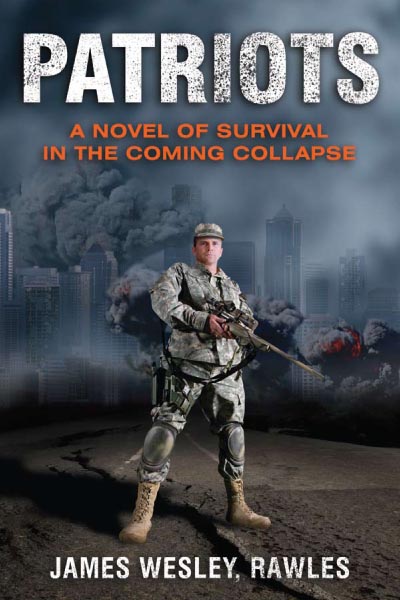
My first novel was titled Patriots: Surviving the Coming Collapse. This is the expanded edition of my novel Triple Ought (re-titled TEOTWAWKI in an interim edition). Huntington House published a paperback edition of my novel from November of 1998 to January of 2005. Sadly, Huntington House went out of business in early 2005. The good news is that the book recently went back into print with a new publisher, XLibris.

Patriots is a novel about a socioeconomic collapse in the near future. It was described by one reviewer as a "survival manual fairly neatly dressed as fiction." There are so many useful details included that most people find themselves taking notes as they read it.

There was some confusion about the various editions of the novel. Some people have written asking if Patriots is a sequel to Triple Ought or TEOTWAWKI. It isn't. Rather, it is a thoroughly fleshed-out edition of the same story line. There is a wealth of new technical detail in Patriots, and even some new characters. Much of the material was suggested by readers from all around the globe who had read one the draft shareware editions. I greatly appreciate their input!

************************************************************************************

READ LEVITICUS CHAPTER 26, VERSE 19

IT SAYS I WILL BREAK THE PRIDE OF YOUR POWER AND YOUR MILITARY WILL BE SPENT IN VAIN.
YOUR SKY WILL BE LIKE IRON (NO RAIN)
AND YOUR EARTH SHALL BE LIKE BRASS (NOTHING WILL GROW)

Drought Is Sapping the Southeast, and Its Farmers

Erik S. Lesser for The New York Times